
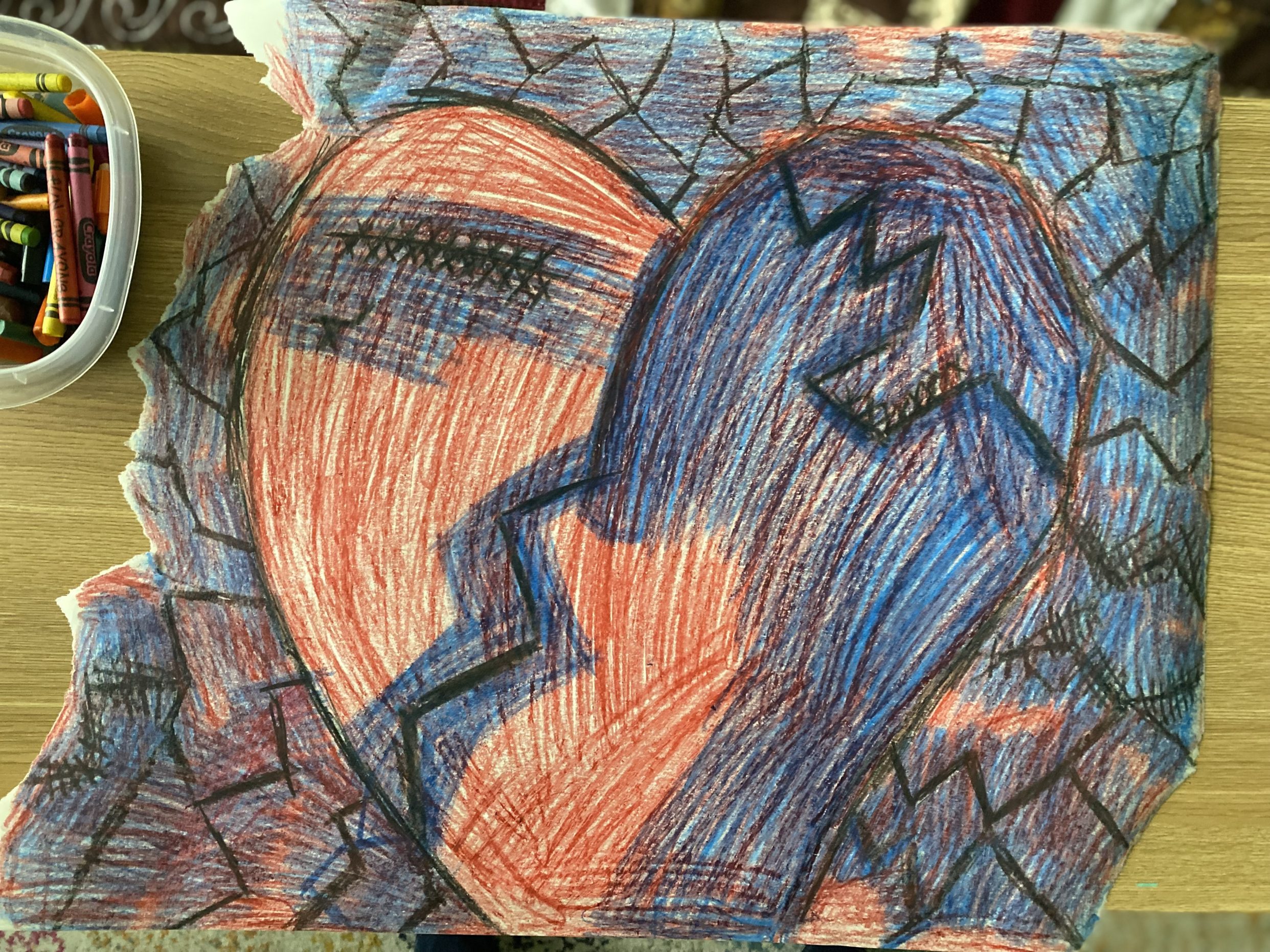
Hello. My name is Anxiously Attached.
I will run and do anything for you.
I will put my needs aside to make you comfortable.
Just so you don’t leave.
Why?
That’s the question beneath everything.
What Anxious Attachment Actually Is
Anxious attachment isn’t weakness.
It’s a nervous system shaped by unpredictability.
When connection felt inconsistent growing up, your system adapted. It learned:
“If I stay close enough, attentive enough, helpful enough — I won’t be left.”
Clinically, we call this hyperactivation.
It shows up as:
Overgiving
Overanalyzing
Monitoring tone shifts and response times
Protest behaviors when you feel distance
Fear of abandonment beneath everything
The anxious–avoidant dynamic often intensifies this pattern. The more you reach, the more they withdraw. The more they withdraw, the louder your attachment alarm becomes.
It’s not irrational.
It’s protective.
But protection can become self-abandonment.
The Performance of Worth
You call — I’m there.
You need something — I’ll provide it.
You want reassurance — I’ll overdeliver.
I’ll give you my best pitch.
I’ll be the best version of myself.
I’ll sell you on my worth.
Why?
Because if I am indispensable, you won’t leave.
Overtime is not a problem.
Emotional labor is not a problem.
Sacrificing myself is not a problem.
Abandonment is the problem.
Being alone is the problem.
Or so I think.
The Hidden Loneliness
Here’s the paradox.
Anxious attachment fears being alone —
yet often feels alone inside relationships.
I have said to myself before:
“I’d rather be alone with a person than alone with myself.”
That sentence is the core wound.
Because anxious attachment isn’t just fear of others leaving.
It’s fear of being with your own unmet needs.
Somewhere along the way, many anxiously attached individuals internalized:
“I am too much.”
“My emotions are overwhelming.”
“My needs are inconvenient.”
“I’m not interesting enough on my own.”
So instead of turning inward, we turn outward.
We focus on the other person for years.
We over-invest.
We over-function.
We push our own pain down.
Until we burn out.
Why It Eventually Cracks
No partner — especially an avoidant one — can fulfill needs that you haven’t identified yourself.
And often, deep down, you know that.
You know when someone cannot meet you.
You feel it in your body.
But hope is powerful.
And fear is louder.
So you stay.
You try harder.
You convince yourself it will change.
Until you end up where you started:
Alone.
Exhausted.
A little older.
Still carrying the same unmet need.
My Personal Reckoning
As a therapist, I understand the theory.
As a human, I’ve lived the pattern.
I know what it feels like to over-function in relationships.
To confuse effort with security.
To try to earn love through performance.
And I know what it feels like when that strategy collapses.
The breaking point wasn’t dramatic.
It was exhaustion.
It was realizing that I was abandoning myself in order to avoid being abandoned.
That awareness changed everything.